Sunday, May 10, 2015

I Gave A Student A Poem

At lunch a student stopped me to ask:
Why do we sleep?
“So our daemons can tidy our mind-maps.”

And from whence dreams?
I told him of the Sandman,
And pixies mixing elixirs of reflection.
Thank you, Ms. W.
That sounds true.

At the door of the cafeteria two of my students stood,
Ready to erupt into more should I pause,
And become a Cerberus of helpful good.

I handed one the psychology textbook.
The other, just as casually, a poem to hold.
Careful, don’t crush it, let it breath.

Where are you going?
To blow that wonderful bubble, the moon;
I promise to be back soon.

Damn,
Ms. W,
That was like slam.

When I returned it was just as I’d hoped.
The poem had taken root.
He could not give it back.
The other sat on the psych book;
The tendrils of the poem were playing with his hands.

Next year I will teach poetry.
Next year I will teach less-traveled roads,
Next year I will teach imaginary gardens with real toads.
Next year near Jerusalem.


P.S. Friday I stood in front of my class, introducing abnormal psychology, and seguewayed into an involuntary digression on "The Yellow Wallpaper." The students wouldn't let it go-- "are you bringing it in? Can we read it?" I'd forgotten the incredible infectiousness of the leseglad. This week we start psychology through literature. Next year, life through literature.

Wednesday, May 6, 2015

Value Your Education

A week or so ago, I walked into my classroom, and said this:

“This is a picture of Dorothy Counts. She was the first African-American to go to our school. She lasted four days. She was spat upon, had things thrown at her, and racial slurs screamed at her. Then her parents moved her to Pennsylvania to go to school there. If you could ask her any question, what would you ask her?”

“Why did you do it when you knew it would be so hard?”

“What were you thinking when people spat on you?”

“Why did you give up?”

“Good questions,” I told my class. “Let’s go ask her.”

They just looked at me, and then one student broke into a broad grin. “Aw, you’re playing us, Ms. W.”

“No. She’s in the media center. Let’s go ask her.”

“If you are playing us, I’m gonna be mad,” I heard from all over the class. But when we walked into the media center they got solemn. The jazz band was playing, chairs were set up in a row of honor, a buffet was set out, and clearly Ms. W hadn’t planned a prank this elaborate just to mess with students’ minds.

When Dorothy Counts-Scoggins entered, we stood up and cheered. This was living history, the first person like them to walk into the school. I looked around the crowd. Now it was all people like them. We’d gone right back to segregation. What had been won?

A senior, the school poet laureate, gave his slam poem about being on the verge of killing or being killed by his community. Then Dorothy Counts-Scoggins spoke. She told her story, and opened up for question. I was proud of one of my students for raising his hand twice. Another student I know from the National Honor Society delivered a bombshell: how do you feel when students don’t value their education, and all the hard work you did goes for nothing?

Ms. Dorothy turned it right back upon the students. “Why don’t you value your education? Why?” Students shifted uncomfortably. Teachers waited to see what they would say. One of my IB scholars raised her hand and spoke about lack of resources and illiteracy in high school. “How can someone who doesn’t know how to read because his teachers failed him in elementary, value a high school education?” I was proud of her for raising this point.

Dorothy Counts turned it right back around. “You have a voice? Get out there and get heard. Tell them about your lack of resources. Go to city council meetings and on social media. People will listen to you. Your voices matter.” As we applauded her, a surge of energy ran through the crowd. She had challenged them, and acknowledged their agency.

Yesterday I headed outside for my planning period. The art classes were on the quad, and after cheerfully heckling two of my best students with an art teacher who agrees that their academic game is on fleek, I sat down to grade with them. They headed inside a few minutes before the bell rang. I heard one of the campus security guards scream at someone with apoplectic rage, but it’s so common, I didn’t turn around to check it out. After the bell rang, the art teacher approached me.

“That was A being shouted at. He’s one of my best. You said he was one of yours, too, right?”

“That was A? Why on earth--?” We agreed that nobody should be shouted at like that. One of our best students, a tall, dignified young man who’s about to graduate, was screamed at for no reason other than that he was caught outside by security. If I’d been yelled at like that by an adult in high school, I would have cried, and then told my parents, who would have agreed that someone who screams at children like that has no place on a school campus.

This morning I stopped A at the door. “Ms. C and I, we heard you being yelled at yesterday, and we just, you know, you know you’re one of our best students, right? You shouldn’t let that bother you at all, okay?”
This is how our education system works. And still they rise.

He looked down at the floor as I struggled to articulate. “I understand,” he said shortly, and went inside. What do you understand, I wondered to myself. Do you understand that as a young black man it’s considered normal for people to shout at you? Do you understand how assumed culpability is written into your skin? Do you understand that after Baltimore, Mecklenburg County is the poorest in the nation, and one in which a child is least likely to change their socioeconomic status in the entire U.S., and therefore ripe for the same horrific scenes as those enacted in Baltimore? Do you understand the embarrassed guilt your two white teachers feel that we are not capable of physically shaking the world into sense? But then, he’s very smart. Of course he understands. Much more than I do.

I spent last night on Google drive, curating the massive study guide that my students were building together in preparation for their IB exam today. Towards the end of the night, I linked them a study about how sleep affects exam performance, and suggested they all go to bed. When I woke this morning and checked the spreadsheet, some busy bees were still on it, working through neurotransmission and the ethics of genetic research.


I walked my students to the door of the media center before their exam. I hugged the ones who needed it, and told them good luck as they went through the doors. I was a bit of a nervous wreck, but I exuded confidence as strongly as I could. Then I went to watch one of my favorite students become the commander of the whole school at the year’s JROTC awards ceremony. When I came out, my students were finishing their exam. I hovered by the door. Some told me it was easy, others ran over the studies they’d used nervously, hoping they were the right ones. As one of the top students in the class described what she’d written to me, a fight broke out behind her. Two students attacked each other viciously, and security guards rushed in to drag them bodily off of each other as a maelstrom of screaming students converged upon them. But my student never broke stride, ticking off cognitive psychology studies on her fingers. Here, I thought. Here is the answer to Dorothy Counts. Here is the student who values her education above all else. 


Monday, April 20, 2015

Powerful Beyond Measure

I’m sitting on my balcony, reading Middlemarch. It strikes me as a rare treat, two or three times a year, that enough time has elapsed since I’ve read it last for me to feel it freshly, and I pull it off my bookshelves and delve into its wisdom. I have the feeling that few people appreciate this, least of all the friend who woke me up late last night with a call for romantic advice and instead received an exegesis on what Dorothea's choices in love represent. I chuckle as I recall it. Beyond, the trees toss restlessly in the wind. Suddenly, a deep metallic alarm sounds, and draws me out of the world in which an author can admonish her reader to “inquire into the comprehensiveness of her own beautiful views, and be quite sure that they afford accommodation for all the lives which have the honour to coexist with hers,” without seeming at all preachy. 

            My phone is lit up with a flash flood and storm alert. I turn off the alarm and toss it back inside, onto my carpet, and put George Eliot down with respect. I need to grade sixty essays tonight. My students have written about the drug problem in America, including psychological and physical effects, and I promised I’d return them so that we can finish drugs before we start racism tomorrow. We lead an exciting life. I begin to read through the essays.

 “I have 4 aunts and 2 uncles and they all smoke weed. Out of 6 of them only 2 graduated from high school, because they got lazy and didn’t want to finish school but get high.”

“My sister’s father was on a drug called water and he became abusive and harmed others.”

“I lost my grandpa because someone tried to fight him because of drugs, and when my grandpa won the fight, the man retaliated; shot and killed my grandfather on the steps of a crackhouse. This proves that drugs…”

            I put the papers aside for a moment. Although there is something incredibly life-affirming about reading these essays and picturing the three motivated, successful students who wrote them, students who rose out of the embers of others’ lives by their own sheer willpower, they hit me too heavily. Their matter-of-fact acceptance of ugliness in their lives brings to mind the glass of the door shattered in the gym today, by students who kicked it in because they were mad at being locked out, and my brilliant student who told me glumly in third block that she can’t go to OSU after all—Chapel Hill gave her a better scholarship, even though it doesn’t have her desired major. I cast about for something else to think of.

            A memory flits across my mind. Eight years ago, my friends and I crowded excitedly into the auditorium in a women’s college in the Shomron to hear Rav Lichtenstein speak. Rav Lichtenstein, one of the greatest minds of Modern Orthodox Judaism, who had a PhD in literature and speckled his sichot with poetry. I try to remember whether he spoke in Hebrew or English on that day. Odd, not to remember a language. I wonder whether at his funeral tomorrow someone will quote Milton, and whether they will read him in English or Hebrew. I hope so—I hope someone realizes that this great leader’s teachings flowed sweeter through his poetry.

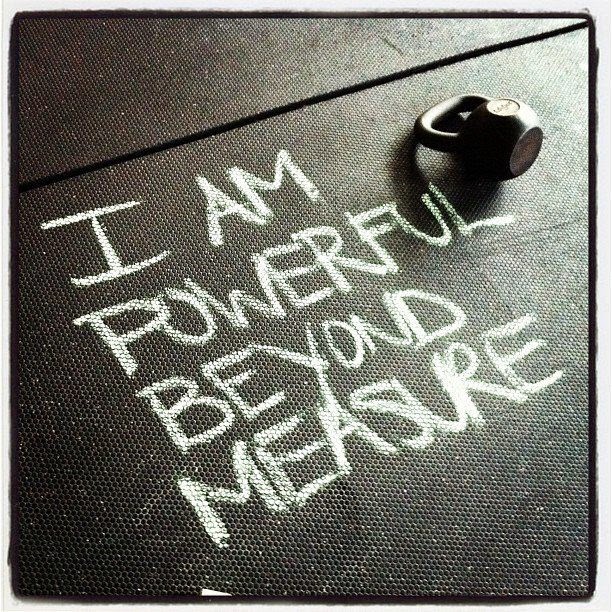
            On the far side of my desk I have painted a poem. This afternoon, a student came for tutoring during my planning period and snapped a picture of it on his phone.

            “I’ve read it a million times,” he told me, “while I sit here and wonder what it means. I’ve been meaning to take a picture for a while.” He needs to finish writing his essay on drugs. He excelled in the debate. But his essay was a paltry unfinished paragraph, born of his reluctance to write, and I told him he owed me an essay.

            “I guess I’m afraid to write. I’m afraid that I will make a mistake and it will be written forever.” We talked about the beauty of editing, of slashing out the dross and leaving the gold. He bent his head over his desk and attacked his paper with good will. By the time the end-of-day announcements came on, he was finished, and eager to talk.

           “What does articulate mean?”

            “It means knowing what you want to say and saying it well, sharply, clearly, perfectly. Why?”

            “You wrote it on my first draft, when you said if I’m this articulate in speaking, I can write, too, I just have to figure out how to make it happen. But I wasn’t that articulate always—I used to be really—to not be confident. Now I’ve mastered speaking, maybe I should try to master writing.”

            I played it cool, rubbing my ear casually to stop the trumpets from blaring. My student will try to master writing. “Yeah. I’ll help, if you like.” We discussed some possibilities for creative starts.

            “You know, the award I got from you this year, that was the first time I got one in like, three years.”

I’m astonished. “How is that possible? Are you the same in your other classes as you are in here?”

“You mean, like participating? No, I guess not. It’s because… it’s because of conformity, I guess. Nobody really cares, so I don't either. I don’t really bother. I feel safer being myself in here.”

“Huh. That’s good. I'm glad.” I'd like to say me too, but refrain.

 “Yeah. I don’t know what I was afraid of, before. Maybe… there’s this line somebody once told me, that our worst fear isn’t about being inadequate… I can’t remember it.”

I can. As we head out into the sparkling afternoon sun shower, I tell him, “Our deepest fear is not that we are inadequate. Our deepest fear is that we are powerful beyond measure.” My student hitches up his backpack jauntily and waves goodbye, secure in the joy of confronting his deepest fear.

Monday, April 13, 2015

Cry Havoc and Let Slip the Bells of School

The bell rings warning.
He told me to kill myself over break.
Our house went on fire. My two-year-old cousin started it.
What is it? Mazzah? Jew-bread? Oh, a cracker!
Did you see the pictures of the new baby? Looks just like his daddy.
43 days left in the school year, Ms. W.

The bell rings first.
More than 60% of US prison inmates read at an elementary school level.
Do we have to write the question?
Just because everyone does it, doesn’t mean it should be legal.

The bell rings second.
I walked him so he'd be on time.
You always make your own choices, not your body.
Are you a student for this one? Can I be teacher?
They keep marijuana illegal to make money.
They keep marijuana illegal to put black people in jail.
Nobody should get the death penalty.

The bell rings third.
Be quiet, y’all. I mean it. 
She's waiting for you.
NINE days?!
What is validity, again?
Remind me what validity means.
So, valid is…
What’s the difference between validity and reliability?
Go ahead, answer her first, I just had a question about validity.

The bell rings fourth.
Don’t I know you? I want to know you.
Do you read your poetry in Spanish or English?
I’m sorry, my butt got in the way of the paper cutter.
His mother thinks he’s her husband, not her son. 
Sei meg ka er du redd for? במקום בו המשוררים בוכים. 

The bell rings one last time.
She said, 'I can't let it annoy me,' but then why did she erupt?
Are you playing sticks? I mean shoes?
I’ll supervise.
I, a minority male, no, a male person, no, a person, I’m proud—
You are smart and beautiful and crying. Why are you crying?
My friend isn't, anymore. Besides, I wasn't crying.

Goooodbyyyyyyye Ms. Dooooooooubleyouuuuuu!

Tuesday, April 7, 2015

The Aspiring Goldfish

“Hello there. Are you ready?”

“Almost. I’m nervous!” The principal smiled at me crookedly, as if to say I should woman up, and I decided to run backstage to check on everything. The jazz band was setting up in front—there was nothing I could do to hurry them along. In the wings, the National Honor Society members in charge of collecting new inductees from their classes had their little pink slips on which I’d written room number and name, and were heading out. I started checking their destinations to make sure—

“Ms. W! Ms. W!”


“Hey, hon! Why are you not on stage already? You’re lighting the candle for character during the ceremony.”

“I know, but we have to find me a skirt to put on top. I look like a hoe.”

I surveyed her outfit. She was wearing a one-piece silky black jumpsuit with the cleavage cut down to her belly button, and it ended in the shortest possible shorts. I wrinkled my nose.

“You need a cardigan, too.” Someone rushed up to us with a pair of bright blue six-inch heels.

“Do these help?” They turned to me.

“I think not.” Sigh. I moved back into the audience, shaking the hands of parents who had come to see their children inducted into the National Honor Society. It was my first induction as advisor, and I wanted to be sure I didn’t get anything wrong. I moved toward the door of the auditorium to check on the two girls that I’d asked to set up the refreshments.

“Uh, see, what happened is—“ One of the girls broke off her attempt at explanation, aghast at the expression on my face.

I surveyed the scene in astonishment. The incoming audience were being ushered around a large puddle of water right by the door.

“But I only bought lemonade and pop. Where’s the water from?”

Sheepishly, the girl held up the plastic bag she carried. It had a large puncture, and in a half-inch of water at the bottom swam a sluggish goldfish.

“The other two are on the floor! What do we do, Ms. W?” I was amazed.

“Why did you bring your goldfish to Induction? No, wait, first get cups.” As the girls tried to clean up the water, I checked my watch.

“No time, no time!” We placed the refreshment table directly over the puddle. I advised them not to leave the goldfish on it—they’d end up as refreshment for an unhappy guest.

The jazz band had started. I grinned at the incoming inductees, lined up by the door (six of them were my students, past or present) and marched up to sit on the stage as the jazz band played. The president of the NHS began.

“Character is the force within the individual that distinguishes each person from others.  It creates for each of us our individuality, our goodness…”

The eleven students stood to take the NHS pledge with one hand raised. The current board fumbled to light their candles representing leadership, scholarship, character, and service. We said the Pledge of Allegiance and listened to the jazz band rustle behind us. Finally, it was the moment I wanted. The students were called up one by one, presented with their certificate, and I got to shake their hands. Some of them looked dazed, others, confident in snappy vests and bowties. Finally they were told to recess, and after a few moments of puzzlement in which we made shooing motions, they exited the auditorium to applause.

We took pictures. Lots and lots of them, in different combinations. Some with the NHS logo in the back, some before the mural by the auditorium, some with parents and some without. One inductee approached me with great news about his future, and a parent asked whether they could get a bumper sticker that says, “My student is in the NHS.” I told him we’d look into it.

As the students and parents wound their way out, and the current members cleaned up, I knew I had one last duty. I tracked my student down to read her a lecture on how bringing any kind of animal, especially one as vulnerable as a goldfish, to school, constitutes animal abuse. “Miss, she just wanted to be part of the NHS.”


Today we inducted eleven of the top students at our school. And three goldfish.